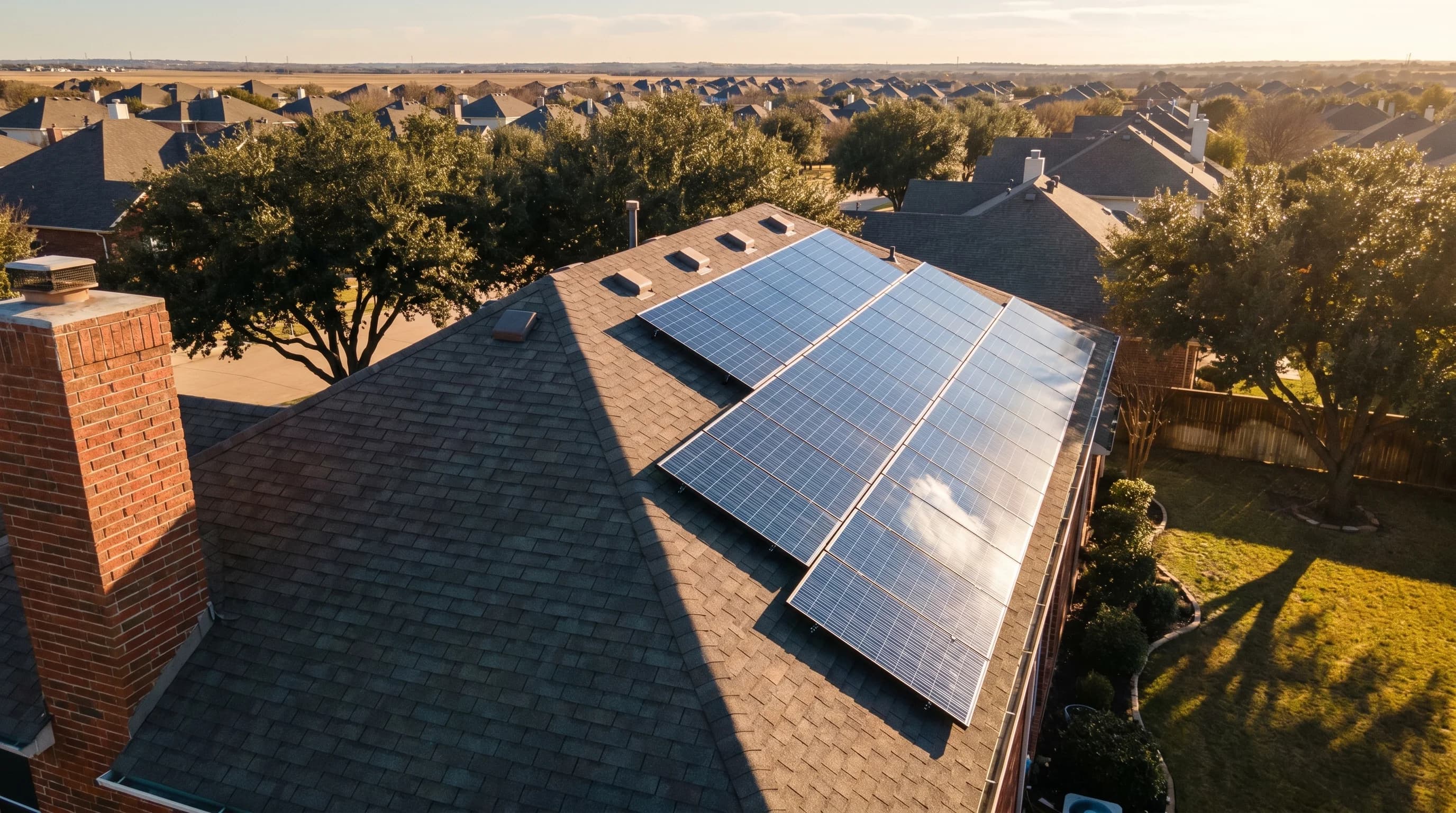
SOLAR PANEL CLEANING IN FORT WORTH & DFW
Restore the output you're losing to North Texas pollen, sprinkler overspray, and baked-on grit. Warranty-safe deionized-water method. Family-owned since 2017.
WHAT'S INCLUDED
Every solar panel cleaning is built around the method panel manufacturers actually require — pure water, soft brushes, no shortcuts.
Pure Deionized Water
No tap-water mineral film, no streaks, no spots. Required by every major panel manufacturer to keep your warranty intact.
Soft-Brush Detailing
Hand-cleaned pollen, dust, and uric acid residue with soft microfiber brushes — no abrasives, no pressure washing, no chemicals that void coatings.
Output Verification
We check your inverter or monitoring app before and after so you can see exactly how much production we recovered.
Critter & Damage Check
While we're up there, we flag bird nests, chewed wires, and post-hail microcracks before they become repair bills.
WHY IT MATTERS IN NORTH TEXAS
DFW panels face conditions most generic solar advice ignores. Here's what's actually costing you output.
Rain Won't Save You
NREL research confirms rain redistributes pollen across the glass instead of removing it. After our two-peak pollen window — mountain cedar in winter, oak in late March — panels stay coated until they're physically washed.
Hard Water Etches Glass
Tarrant County tap water runs about 150 ppm of dissolved minerals. Sprinkler overspray leaves a calcium-magnesium film that cuts light transmission roughly 4% in eight months — and standard garden-hose rinses make it worse.
Damage Becomes Permanent
Bird droppings plus 150°F+ summer roof temperatures permanently etch the anti-reflective coating. Hail grit from spring storms abrades the glass every time the wind shifts it. Days matter, not months.
Frequently Asked Questions
Will spraying water on a hot Texas roof crack my panels?+
DFW panels routinely hit 150°F+ at the surface in summer. Cold water on a hot panel can propagate microcracks, so we schedule cleanings in the early morning or use ambient-temperature filtered water. Time of day is part of the job, not an afterthought.
Doesn't rain clean my solar panels for me?+
No. NREL research shows rain redistributes pollen and dust across the glass instead of removing it. Your panels look wet but production stays low until they're physically washed.
How much production am I actually losing to dirt?+
NREL-derived modeling on a 6 kW DFW system points to roughly $200–$400 a year in lost production from soiling, depending on tree cover and proximity to construction or unpaved roads. Your inverter app shows the gap — compare the same sunny week year-over-year.
My sprinklers hit the panels — what are the white spots?+
Tarrant County tap water runs about 150 ppm of dissolved minerals. Sprinkler overspray dries on the panel and leaves a calcium-magnesium film that doesn't rinse off and reduces light transmission roughly 4% within eight months. Deionized-water cleaning lifts it; better sprinkler aim prevents it.
Bird droppings have been on my panels for weeks — is the damage permanent?+
Uric acid is acidic, and after multiple heat cycles on a hot roof it etches the panel's anti-reflective coating in a way that can't be polished off. Clean within days, especially in summer.
How often should panels be cleaned in North Texas?+
Generic guidance says every six months, but our cycle is different here. Mountain cedar pollen peaks December–February, oak pollen peaks late March–April, and spring hailstorms drop grit through May. For most DFW homes the right cadence is once after spring pollen drops and once before fall production matters most. Heavy tree cover or nearby construction usually justifies quarterly.
READY FOR CRYSTAL CLEAR VIEWS?
Get a free, no-obligation quote for your home or business. We'll assess your needs and provide transparent pricing — no surprises.
AREAS WE SERVE
Professional window cleaning from Fort Worth through Tarrant, Denton, and Parker County.